
Need help with your marble bathroom? Give us a call.
Whether your shower, floors or vanity need routine care or you’re noticing dull spots, stains or a worn finish, we’ll help you figure out what needs attention.
Regular maintenance and proper sealing are important to keeping your marble looking its best. Sealing helps reduce absorption and resist stains, but it won’t prevent acid etching. The right care depends on your stone, its finish and how it’s used.
We’ll take a look, explain your options and recommend the care your bathroom needs.
Serving NYC, Westchester, Connecticut and New Jersey.
A marble bathroom can develop dull areas, stains, mineral deposits and scratches with everyday use. These marks can look similar, but their causes and treatments differ. Before choosing a cleaning product or polishing kit, identify the problem. Some maintenance is straightforward; damage to the finish or the installation needs a more careful assessment.
The Hidden Challenges of Restoring Marble
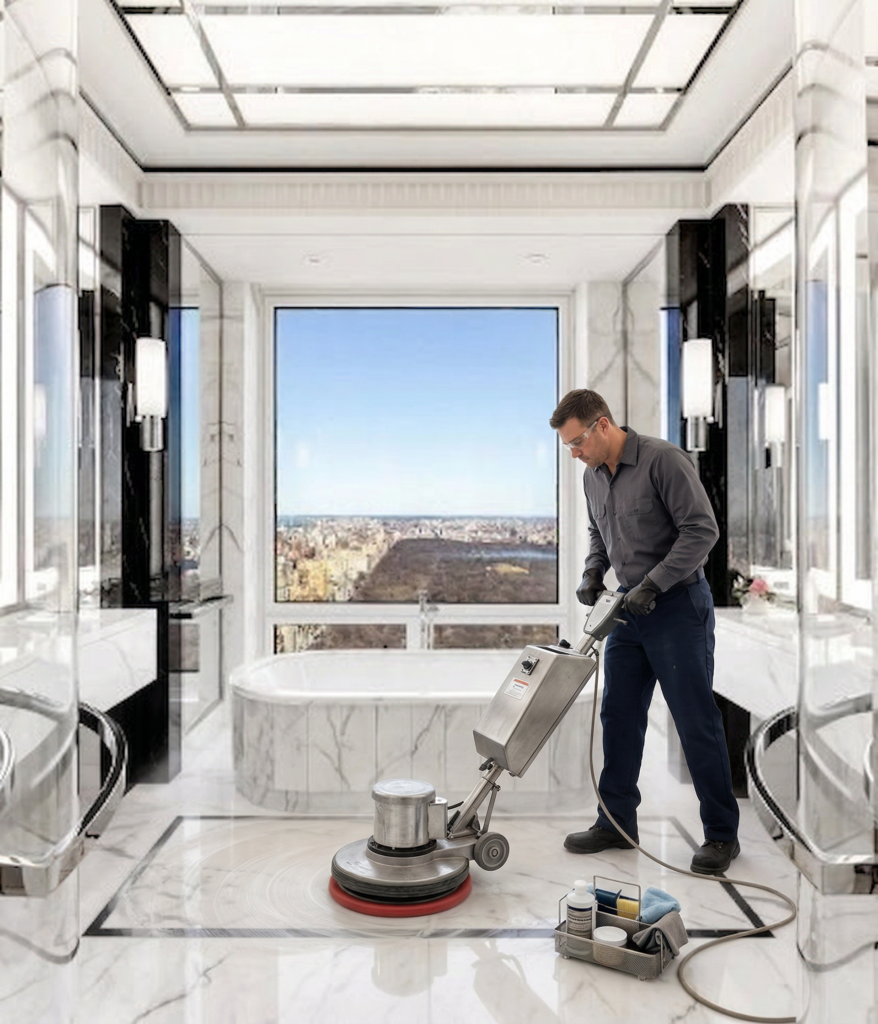
Etching is a chemical reaction between acid and marble that leaves a dull or rough area. Staining is discoloration from material absorbed into the stone. Hard-water deposits and soap residue build up on the surface, while grit or abrasive cleaning can leave scratches. Ordinary water marks should not automatically be called etching, and surface wear does not by itself establish structural damage. Cracks, loose stone or recurring moisture-related discoloration need separate investigation.
DIY vs. Professional Restoration: The Real Difference
Cleaning, refinishing and sealing solve different problems. Appropriate cleaning can remove surface residue; refinishing may be needed to address etching and scratches. An impregnating sealer can reduce absorption and help resist staining, but it does not make marble stain-proof or prevent acid etching. Sealer selection and application should suit the particular stone and follow the manufacturer’s directions. Sealing does not repair cracks or correct a leaking shower.
DIY: The Appeal and the Risks
For routine care, use a cleaner labeled suitable for marble, a soft cloth and a thorough rinse, then dry the surface. A squeegee after showering helps limit soap buildup. Avoid vinegar, acidic descalers and abrasive scouring products. If a mark remains or you are unsure what caused it, pause before trying stronger chemicals or a polishing kit. The wrong treatment can leave an uneven finish.
When to Call in the Experts
Call a stone-restoration professional for widespread etching, deep scratches, persistent stains, chips or cracks. At Artistic Marble & Onyx, we assess the stone, its finish and the condition of the installation before recommending treatment. Depending on what we find, that may involve cleaning, stain treatment, honing, polishing or a localized repair. Existing damage and previous treatments can limit the result; some conditions require repair beyond the stone surface.
The Long-Term Benefits of Professional Care
Professional care starts with a realistic assessment and a maintenance plan suited to your bathroom. Restoration may improve appearance and make the finish more consistent, but it cannot guarantee a like-new result or eliminate future wear. For general care guidance, see the Natural Stone Institute’s care and cleaning advice.
Need help with marble elsewhere in your home? We also restore kitchen countertops, stone floors, fireplace surrounds and other natural-stone surfaces. Call me at 646-337-5100, and we’ll talk about what needs attention. —Joe
Discover more from Artistic Marble and Onyx
Subscribe to get the latest posts sent to your email.